Brought bed bugs home from a trip? A Boise checklist
If you think you brought bed bugs home from a trip, keep the suitcase out of the bedroom, run your travel clothes through a hot dryer for 30 minutes, and check your own bed for the next two weeks. Most of the time that is enough. Below: the first hour home, what to watch for, and the point where a laundry problem becomes a treatment problem.
In this guide
The first hour home: a suitcase checklist
Bed bugs from a hotel travel in your luggage, so the suitcase is where the defense starts. The EPA's travel advice: unpack directly into the washing machine, inspect the luggage carefully, and store suitcases away from the bedroom. Here is that routine for a Treasure Valley house with a garage.
| Step | What to do | Why it works |
|---|---|---|
| 1. Stop at the garage | Leave the suitcase zipped in the garage or laundry room. Not the bed, not the bedroom carpet. | The EPA says to store suitcases away from the bedroom and never under the bed |
| 2. Washer, then dryer | Unpack straight into the machine. Then dry everything on high for 30 minutes, worn or not. | The EPA notes washing alone generally will not kill bed bugs, while 30 minutes of high dryer heat does |
| 3. Bag the rest | Shoes, toiletry bags, anything that cannot tumble goes into a sealed plastic bag. | EPA do-it-yourself guidance: sealed items can stay bagged for up to a year so any bugs inside die |
| 4. Vacuum the case | Seams, zipper tracks, wheel wells, the pocket lining. Then seal the vacuum bag and take it to the outdoor bin. | The EPA advises sealing the bag tightly and throwing it out in an outdoor trash container right away |
| 5. Look in good light | Flashlight along every seam: tiny dark spots, pale shed skins, a flat brown bug. | The EPA's own step: inspect your luggage carefully |
One note about the garage: it is a staging area, not a treatment. The EPA's cold-kill figure is below 0°F for at least four days, which a chest freezer can hold and a chilly week in the garage will not.

What one missed bed bug can turn into
The worst realistic outcome of a missed hotel bed bug is a whole-house infestation grown from one insect you never saw. Virginia Tech Extension states that a single mated female can start an infestation with no male present, producing one to seven eggs a day for about ten days after a blood meal.
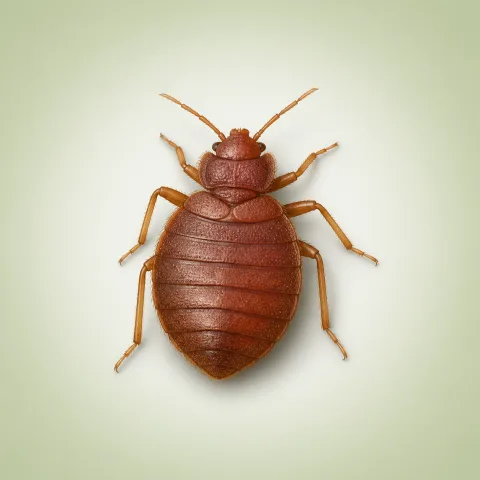
So play it forward. Sunday night, back through the Boise Airport, you flop the suitcase open on the bed. The dirty clothes sit on the bedroom carpet until Wednesday. In one seam is a flat, reddish-brown bug about the size of Lincoln's head on a penny, the CDC's comparison. By Monday night she has found the mattress piping. She feeds at 3 am and you sleep straight through it. The itchy welts on your forearm? Mosquitoes on the Greenbelt, you figure. Her eggs hatch in six to nine days, and about 37 days after they were laid her children are breeding adults, per the same bulletin. Then comes the 2 am night with a phone flashlight over a peeled-back fitted sheet: rusty dots in a line along the seam. Bed bugs tend to live within 8 feet of where people sleep, the CDC says, so the headboard, nightstand and reading chair are next. Then the couch, where you started sleeping.
The honest part: bed bugs are not known to spread disease, per the CDC. What they take is sleep. Itching, insomnia and anxiety are on the CDC's own symptom list. And money, because a one-room job quietly became a whole-house job while you were blaming mosquitoes.
How to tell if bed bugs came home with you
Bed bugs that rode home in luggage show up as evidence around the bed long before you see a live one. The University of California's IPM program puts their usual hiding places within 6 feet of where people sleep or rest: mattress seams and tufts, box spring joints, cracks in the bed frame, behind the headboard. Check those spots with a flashlight every few days for two weeks.
- Rusty or dark spots on sheets, pillowcases and mattress seams.
- Shed skins, pale and empty.
- Eggs, white and about 1/20 inch long according to UC IPM, tucked into seams and joints.
- The bugs themselves, flat and reddish brown, between 1 mm and 7 mm by the CDC's measure.
- Bites in rows or clusters. The weakest clue: the CDC says marks often appear one to several days later, and other bites and rashes look the same.
DIY steps for the two weeks after a trip
The DIY routine after a trip is heat, vacuum, containment and watching, and it catches most early hitchhikers before they settle in. Do all of it, not the parts you like.
- Put interceptors under the bed legs. Cheap plastic cups the bugs walk into and cannot climb out of; UC IPM reports they trapped six times more bed bugs than visual searches alone. Pull the bed off the wall so the legs are the only way up.
- Encase the mattress and box spring. The EPA says encasements trap bed bugs and help detect infestations. Light-colored ones make every spot obvious.
- Vacuum the seams and headboard, then seal the bag and take it straight to the outdoor bin, as the EPA advises.
- Keep sleeping in your own bed. Bed bugs follow the person, so moving to the couch just spreads them.
- Skip the bug bomb. UC IPM says over-the-counter foggers have been shown to be ineffective for bed bugs and potentially harmful to residents. Fog does not reach a mattress seam.
When DIY is not enough: five signs
Bed bugs from a trip become a professional job the moment the evidence says they are already breeding in your house. Any one of these is enough:
- A live bug, egg or shed skin in the bed after the laundry routine. The suitcase stage is over.
- New bites or fresh spots more than two weeks after you got home. Eggs hatch in six to nine days, so late evidence usually means a second generation.
- Signs outside the bedroom, on the couch, a recliner or a kid's bed.
- Shared walls. The CDC says bed bugs can travel over 100 feet in a night, so in an apartment, duplex or townhome the next unit is part of the job.
- A deadline, or someone who has stopped sleeping. Guests, a move, a new baby.
If one of those fits, the sensible next step is a phone call, not another trip to the hardware store. Call (208) 999-4091 and we connect you with a licensed local provider serving Boise, Meridian, Nampa and the rest of the Treasure Valley, who can inspect and give you a price with no obligation. Same-day and 24/7 emergency services are subject to provider participation, location, technician availability, and demand. Availability is not guaranteed and may vary by market and appointment capacity. If guests or a move are only days away, our emergency pest control page covers those deadline cases.
What professional bed bug treatment typically costs
Professional bed bug treatment is priced by how far the bugs have spread, which is the whole case for calling early. Angi's 2026 cost data puts treatment at roughly $200 to $400 per room, and a full extermination at about $1,000 to $4,000 depending on method and severity. Those are typical market ranges, not a quote: only the provider who inspects your home can price it. Our bed bug treatment page for Boise explains heat versus chemical treatment, and the Boise pest control cost guide compares bed bugs with other pests.
Now the good news, and it is real. Most suitcase scares end in the laundry room. Bed bugs are drawn to people, not dirt, and the CDC is clear they are not known to spread disease. Keep the case out of the bedroom, trust the dryer, check the seams for two weeks, and if they stayed anyway, call while it is still one room.
Bed bug travel questions from Boise homeowners
How long after a trip do bed bug signs show up?
Bed bug signs after a trip can take days to weeks to show. The CDC says most people do not notice bite marks until one to several days after the bite, and Virginia Tech Extension puts egg hatch at six to nine days. So a quiet first week proves little. Fresh bites, spots or shed skins two to three weeks after you get home are the stronger signal, because that timing fits a second generation hatching in the bed.
Does washing travel clothes kill bed bugs?
Washing alone usually does not kill bed bugs, the dryer does. The EPA's travel advice is to unpack straight into the washing machine and warns that just washing will generally not kill bed bugs, while its control guidance calls for bedding and clothing in the dryer at high temperatures for 30 minutes. Clothes you never wore on the trip should go through the hot dryer cycle too.
Can one bed bug from a hotel start an infestation?
Yes, if that one bed bug is a mated female. Virginia Tech Extension states that a single mated female brought into a home can cause an infestation without a male present, producing one to seven eggs a day for about ten days after a blood meal and later mating with her own offspring. That is why a single live bug found in a Boise bed after a trip deserves an inspection rather than a shrug.
Should I use a bug bomb on bed bugs I brought home?
No. The University of California IPM program says over-the-counter total-release foggers have been shown to be ineffective for bed bug control and potentially harmful to residents. Bed bugs hide in mattress seams, bed frame joints and wall voids that fog does not reach. Heat for fabrics, a vacuum, mattress encasements and a professional inspection all work better than a bomb.
Found a bed bug after a trip? Get it confirmed before it spreads.
Get a free, no-obligation quote from a licensed Boise-area bed bug pro. It takes under a minute.