Pest control in Caldwell, Idaho
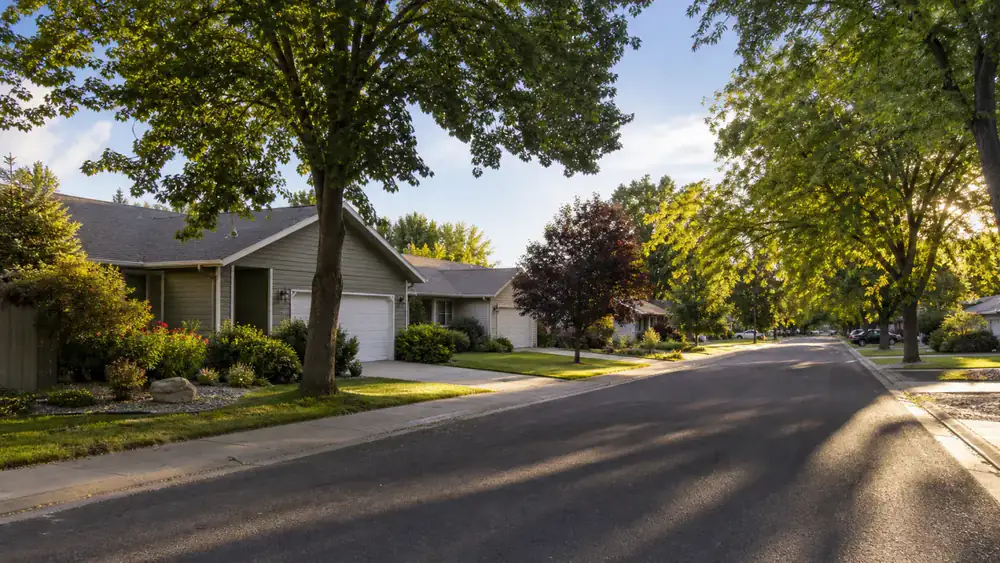
Caldwell is a working agricultural town on the Boise River, and its pests come with the territory: rodents and crickets off the surrounding fields, spiders wherever the insects are, and moisture pests along the canal network. This page explains the local pattern, typical treatment costs, and how to get a free quote from a licensed Caldwell-area pro.
Why farm country shapes Caldwell's pests
Caldwell, a city of roughly 65,000 on the Boise River, is the agricultural hub of Canyon County, and that is the single most useful fact for understanding its pest problems. Orchards, vineyards, seed crops and row-crop fields press right up against the city limits, and every one of them is a year-round nursery for the mice, voles, crickets and field insects that eventually test the nearest house. When crops come off in late summer and fall, the food and cover in those fields collapse over a few weeks, and the displaced pests move in a predictable direction: toward heated buildings with attached garages, pet food and crawl spaces.
The pests Caldwell homeowners call about most
Caldwell's complaint list is dominated by seasonal invaders rather than year-round infestations:
- Rodents, the top fall and winter call. Field mice and voles leave harvested fields and vegetated canal banks for garages, sheds and crawl spaces. Effective work pairs trapping or baiting with exclusion, the approach described on our rodent control page.
- Crickets, which build up in the surrounding fields all summer and then chirp from window wells, garages and basements from August on.
- Spiders, including hobo and wolf spiders, which follow the insect food supply to foundations, porch lights and woodpiles. Late-summer webs around eaves are the classic Caldwell sign; see spider control for how providers treat them.
- Ants and earwigs, sustained through the dry months by irrigated lawns and flower beds, trailing indoors when colonies peak in early summer. Colony baiting, the core of professional ant control, outperforms spraying the visible trail.
- Wasps, nesting under eaves and in outbuildings on larger rural-edge lots.
Canals, the river and moisture pests
Caldwell is laced with irrigation infrastructure, from big canals to the small laterals that water residential neighborhoods, plus the Boise River and Indian Creek running through the middle of town. That standing and slow-moving water keeps a moisture corridor open through Idaho's dry summer, and pests exploit it. Earwigs and pillbugs persist in beds that never fully dry, spiders hunt the abundant insect life along the banks, and rodents use the brushy canal edges as protected highways between fields and back yards. Homes that back onto a canal, a lateral or the river greenbelt see measurably steadier pest pressure than the city average, and providers typically recommend a maintained exterior barrier for them rather than one-off treatments.
Downtown and College of Idaho area homes
Caldwell's older neighborhoods, the blocks around downtown, Indian Creek and the College of Idaho campus, hold homes built in the early 1900s, and age is their main vulnerability. Settled foundations, original wood siding and unscreened crawl-space vents give mice, spiders and overwintering insects entry points a newer build simply does not have. The newer subdivisions on the south and east edges of town, largely in ZIPs 83605 and 83607, are tighter but sit closest to active farmland, so they take the brunt of the fall field migration instead. Either way, the fix starts with a provider who works your specific ZIP and knows which pattern applies to your street.
Caldwell's seasonal pest calendar
Caldwell's pest year follows the crop and irrigation cycle:
- Spring (March to May): ants surge as soil warms; wasp queens start nests under eaves; voles reveal winter lawn damage; irrigation water returns to the canals and moisture pests wake with it.
- Summer (June to August): earwigs and pillbugs peak in irrigated beds; wasp nests reach full size; cricket numbers climb in the surrounding fields.
- Fall (September to November): the busy season. Harvest pushes mice, voles and crickets toward structures, and spider activity around foundations and porch lights peaks as they follow the food.
- Winter (December to February): rodents already indoors dominate the call log; garages, crawl spaces and outbuildings are where providers find them.
What pest control costs in Caldwell
Typical Caldwell pricing
A one-time general treatment for a Caldwell home typically runs about $150–$400, and quarterly plans commonly run $40–$70 per visit, based on typical market ranges. Rodent jobs that include exclusion work price above a standard spray, and large rural-edge lots can run higher than in-town homes. The provider quotes your exact price on the call, free and with no obligation.
How it works
Caldwell residents get a quote in one step: call (208) 999-4091, describe what you are seeing, and we connect you with a licensed local provider that covers your ZIP code, 83605 or 83607. The provider prices the job on the call, and you decide from there; calling is free and carries no obligation. Same-day appointments are often available for rodent and wasp problems. Same-day and 24/7 emergency services are subject to provider participation, location, technician availability, and demand. Availability is not guaranteed and may vary by market and appointment capacity.
Caldwell is the westernmost city we cover; if you are closer to the Nampa side of the county line, the Nampa pest control page covers that city's distinct mix of farmland rodents, boxelder bugs and older-rental roach pressure.
Pest control questions from Caldwell homeowners
How much does pest control cost in Caldwell?
Pest control in Caldwell typically costs $150 to $400 for a one-time treatment and $40 to $70 per visit on a quarterly plan, based on typical market ranges for the Treasure Valley. Rodent jobs that include sealing entry points price above a standard spray. The licensed local provider gives you the exact figure on the call, free and with no obligation.
Why does Caldwell get so many crickets and spiders in late summer?
Caldwell sits in the middle of orchards, vineyards and row-crop fields, and by August those fields are full of crickets and the insects that spiders feed on. As crops come off and nights cool, crickets move toward foundations and garages, and spiders follow the food supply to porch lights and eaves. An exterior barrier treatment in late summer intercepts both before they settle in.
Do the irrigation canals around Caldwell cause pest problems?
Caldwell's canal network keeps a corridor of moisture running through town all summer, and that sustains pests that dry Idaho would otherwise limit: earwigs and pillbugs in damp beds, spiders hunting the insect life along the banks, and rodents using the vegetated canal edges as travel routes between fields and neighborhoods. Homes backing onto a canal or lateral generally benefit from a maintained exterior barrier.
Are older homes near downtown Caldwell more prone to pests?
Older Caldwell homes near downtown and the College of Idaho commonly date from the early 1900s, and their settled foundations, original siding and unscreened crawl-space vents give mice, boxelder bugs and spiders easy entry. The fix is the same as anywhere: treat the current problem, then seal the specific gaps. Providers who work these blocks know the usual entry points on sight.
Which Caldwell ZIP codes does this service cover?
The service covers ZIP codes 83605 and 83607, which together take in downtown Caldwell, the College of Idaho area and the newer subdivisions on the city's edges. When you call, you are connected with a licensed local provider that works your specific ZIP, and the provider quotes your price on the call. If no participating provider covers your address, you will hear that on the call rather than after a visit.
Pests in your Caldwell home? Get a free quote.
Get a no-obligation price from a licensed local pest control pro covering your ZIP. It takes under a minute.