Pest control in Eagle, Idaho
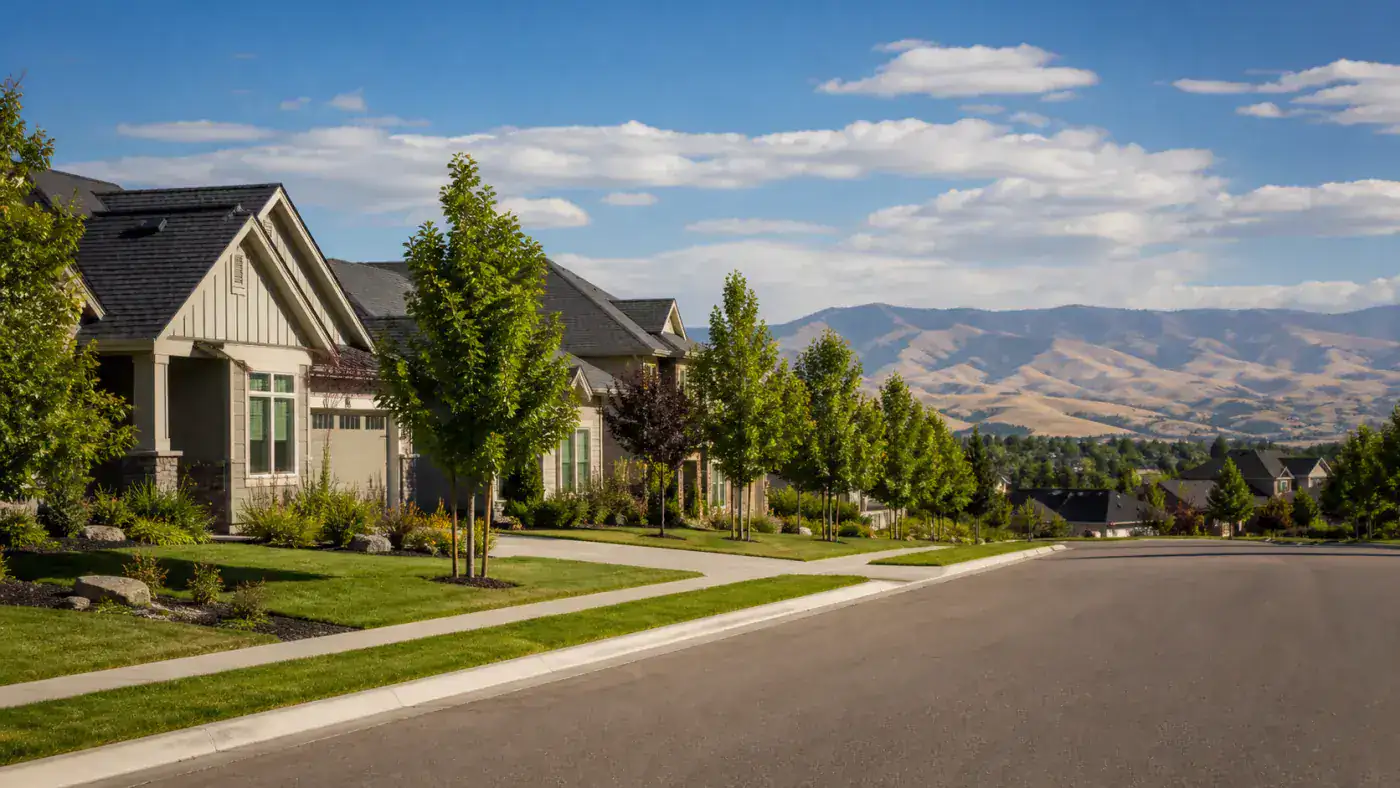
Eagle's pest picture is different from the rest of the Treasure Valley: bigger lots, mature landscaping, and a location squeezed between the foothills and the Boise River. This page covers which pests that geography produces, what treatment costs on larger properties, and how to get a free quote from a licensed provider covering ZIP 83616.
Which pests dominate Eagle, season by season
Eagle's dominant pests are rodents, spiders and wasps, and each has its season. Voles work irrigated lawns and planting beds all year, leaving their surface runways exposed when snow melts in late winter. Spring brings ant trails along patios and pool decks. Wasps and yellowjackets build through summer and peak in August and September, favoring eaves, pergolas and the sheds that large Eagle lots tend to have. From late summer into fall, spiders move toward structures, and the first cold nights of October send field mice from the foothills and river bottom into crawl spaces, garages and barns, where rodent control becomes the main event until spring.
What Eagle sees less of is also worth knowing. Cockroach and bed bug calls are rarer here than in denser parts of the valley, since both spread most easily through multi-unit housing. When they do appear in Eagle, it is usually after travel or a move, and they are treated the same way as anywhere else: quickly, before a small introduction becomes an established population.
Why Eagle's geography works against you
Eagle sits between two permanent pest reservoirs, and that location explains most of what shows up on your property. To the north, the dry foothills hold field mice, voles and the insects that spiders follow; to the south, the Boise River corridor and Eagle Island sustain moisture-loving insects, mosquitoes and dense cottonwood cover. Between the two, Eagle's large, professionally landscaped lots offer exactly what pests want: irrigation, mulch beds, dense shrubs against foundations, and quiet corners. Three consequences follow:
- Mice and voles never really go away. Every fall cold snap pushes a fresh wave from the foothills and river bottom toward heated buildings, so exclusion work, sealing gaps, screening vents, fixing garage-door sweeps, matters more here than one-off trapping.
- Spiders thrive on the insect supply. Homes backing the greenbelt or open space see heavy webbing on eaves and window wells by late summer; a perimeter program keeps spiders outside where they belong.
- Mature landscaping hides wasp nests. Established trees, arbors and outbuildings give paper wasps and yellowjackets far more nesting sites than a newer subdivision offers.
Horse properties, shops and outbuildings
Eagle's horse properties and detached outbuildings need to be part of the treatment plan, not an afterthought. Barns and tack rooms that store feed or hay are standing invitations to mice, and undisturbed rafters are prime wasp real estate. When you call for a quote, describe the whole property, the house, the barn, the shop, the pump house, so the provider can price it as one job. Treating and sealing every structure at once costs less than chasing an infestation from building to building, and it removes the reservoir that keeps reinfesting the house. If mice have already been in the pantry or garage, mention it; droppings and gnawed packaging change the plan from prevention to active rodent removal.
Large-lot tip: keep a two-foot vegetation-free strip against every foundation, store hay and feed in sealed metal containers, and stack firewood away from structures. Those three habits eliminate most of the harborage that Eagle's mature landscaping creates, and they make any professional treatment last longer.
What pest control costs in Eagle
Pest control in Eagle follows the Treasure Valley's typical market ranges, with property size as the main variable. A one-time general treatment commonly runs $150 to $400, and quarterly plans usually cost $40 to $70 per visit; an acre-plus lot with several outbuildings will land near the top of those ranges, while a standard subdivision home sits near the bottom. Specialty jobs, a termite inspection for an older home near the river, or wildlife-grade exclusion on a barn, are quoted after a look at the property. Homeowners in neighboring Meridian face a different, construction-driven pest mix; see our Meridian pest control page for that side of the valley.
Typical Eagle pricing at a glance
One-time general pest treatment: $150–$400. Quarterly plan: $40–$70 per visit. These reflect typical market ranges, not a quote; the licensed provider sets your actual price on the call, free and with no obligation.
How it works
Getting an Eagle pest quote takes one phone call. You call (208) 999-4091, describe the property and what you are seeing, and we connect you with a licensed local provider covering ZIP 83616. The provider gives you a price on that call, and you decide whether to book; there is no obligation and nothing to fill out. Many providers offer same-day appointments during the busy season. Same-day and 24/7 emergency services are subject to provider participation, location, technician availability, and demand. Availability is not guaranteed and may vary by market and appointment capacity.
Pest control questions from Eagle homeowners
What pests are most common in Eagle, Idaho?
Eagle's most common pests are mice, voles, spiders and wasps, a mix driven by the city's large lots, mature landscaping and position between the foothills and the Boise River. Voles tunnel through irrigated lawns year-round, mice move indoors each fall, wasps nest in eaves and outbuildings through late summer, and spiders follow the insect activity that the greenbelt and river corridor support.
Why do Eagle properties get so many mice and voles?
Eagle sits between two natural rodent reservoirs, the dry foothills to the north and the Boise River corridor to the south, so field mice and voles constantly repopulate its neighborhoods. Large landscaped lots give them cover, and every cold snap pushes another wave toward heated structures. That geography is why rodent control in Eagle leans on exclusion and ongoing monitoring, not one-off trapping.
How much does pest control cost in Eagle?
A one-time general pest treatment in Eagle typically runs $150 to $400 depending on the pest and the size of the property, while quarterly plans usually cost $40 to $70 per visit. Larger Eagle lots with extensive landscaping or outbuildings can sit at the upper end of those ranges. These are typical market ranges, not a quote; the licensed provider sets your actual price on a free, no-obligation call.
Do you cover horse properties and outbuildings in Eagle?
Yes, providers in our Eagle network treat barns, shops, sheds and other outbuildings as well as homes. Structures that store feed, hay or tack are natural targets for mice and wasps, so ask the provider to include them when you describe the property on the call. Quoting the whole property at once is usually cheaper than treating buildings piecemeal.
Does living near the Boise River mean more bugs?
Living near the Boise River in Eagle does mean more insect pressure, because the water and cottonwood corridor sustain mosquitoes, flying insects and the spiders that feed on them. Homes backing the greenbelt or Eagle Island typically see more spider webbing on eaves and more wasp activity than homes farther from the water. A regular perimeter treatment keeps that pressure from becoming an indoor problem.
Seeing pests in Eagle? Get a price for free.
Get a no-obligation quote from a licensed provider covering ZIP 83616. It takes under a minute.