Wasp and hornet nest removal in Boise, Idaho
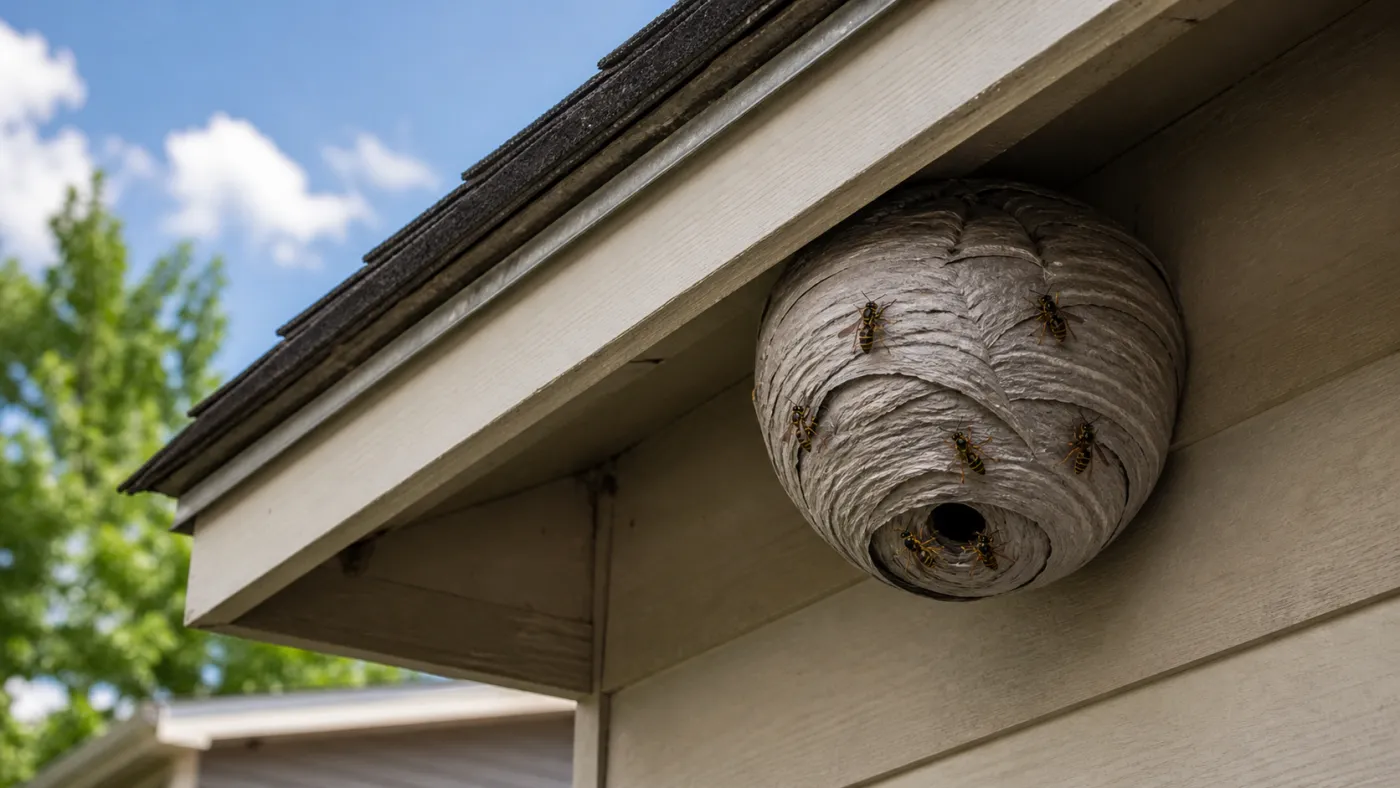
Wasps, hornets, and yellowjackets build all over the Treasure Valley, and by late summer their nests are big, defensive, and dangerous to disturb. This page covers the species you are seeing, why DIY spray goes wrong on a mature nest, what professional removal involves, and what it typically costs.
On this page: Species in the Treasure Valley · Why late summer is worst · Why DIY spray is risky · What pro removal involves · Prevention
Which wasps build nests in the Treasure Valley?
Boise homes deal with three stinging wasp groups: paper wasps, bald-faced hornets, and yellowjackets, and each nests in a different place. Paper wasps hang small, open, umbrella-shaped combs under eaves, deck rails, porch ceilings, and grill covers; you can see the hexagonal cells from below. Bald-faced hornets, the large black wasps with white face markings, build the classic gray football-shaped enclosed nest in trees, shrubs, and on building corners, and they defend it more fiercely than any other local species. Western yellowjackets are the cavity nesters: they move into abandoned rodent burrows in lawns, into wall voids behind siding, and into attic and soffit spaces, so often the only visible sign is a steady stream of wasps entering one hole. Knowing which one you have matters, because the nest location, not the insect itself, drives how removal is done, which is exactly what the technician confirms on arrival.
Why August and September are the worst months for wasps in Idaho
August and September are peak wasp season in Idaho because colonies founded by a single queen in April have spent the whole summer growing, and by late summer they are at maximum size. A paper wasp comb that held a dozen workers in June can hold close to a hundred by Labor Day, and a mature yellowjacket colony in a wall void or burrow can run into the thousands. Big colonies defend hard: more guards respond to any disturbance, and they respond faster. At the same time, natural prey gets scarce and the wasps' diet shifts toward sugar, which is why yellowjackets swarm patios, open sodas, and trash cans across Boise every September. If a nest is near a doorway or play area right now, treat it as an urgent job; our emergency pest control page explains how fast a licensed local provider can typically respond.
Why DIY spray on a large nest is dangerous
Spraying a mature nest yourself risks a multi-sting attack, and that risk is the reason licensed technicians wear full protective suits for the same job. Unlike a honey bee, every wasp and hornet can sting repeatedly, and a disturbed colony can put dozens of defenders in the air within seconds. Bald-faced hornets will pursue a perceived threat well away from the nest. The store can that promises a 20-foot stream still leaves you standing in the open, often on a ladder, which is its own hazard when the first sting lands. Hidden nests are worse: spraying the entrance of a wall-void or ground nest rarely reaches the colony, and it can drive agitated yellowjackets deeper into the structure, where they chew through drywall and emerge inside the house. Sealing the entry hole has the same effect. A small, visible, golf-ball-sized spring nest is a reasonable DIY target after dark; a late-summer colony, an enclosed hornet nest, or anything in a wall or the ground is not.
What professional wasp nest removal involves
Professional removal starts with identifying the species and the nest location, because those two facts decide the method. We connect you with a licensed local provider; their technician arrives with a protective suit, an extension pole or ladder for high nests, and products labeled for stinging insects. Exposed paper wasp combs and hornet nests are treated directly, then physically removed once the colony is dead, since the nest itself otherwise attracts scavengers and, next spring, new queens scouting proven sites. Wall-void and ground nests are treated at the entrance with a dust or foam that workers carry into the colony, collapsing it inside the cavity rather than pushing it indoors. Timing helps too: technicians often treat in early morning or evening, when most of the colony is home and activity is lowest. For nests in wall voids, the technician will also tell you when it is safe to seal the entry gap so next year's queens cannot reuse it.
What wasp nest removal costs in Boise
A one-time wasp or hornet nest removal typically runs about $100 to $300 in the Boise market. Nests in wall voids, in the ground, or high on a roofline sit at the upper end because they take more time and equipment. These are typical market ranges, not a quote; the licensed local provider gives you the actual price on the call, free and with no obligation.
How to keep wasps from nesting on your home
Prevention works because wasp colonies start over every year: nests are abandoned each fall, and new queens choose sites each spring. In April and May, walk the eaves, deck rails, shed, and grill weekly and knock down any golf-ball-sized starter comb you find, which is safe while it holds only the queen. Seal gaps in siding, soffits, and around utility penetrations before spring, and fill abandoned rodent burrows in the lawn, since those are exactly the cavities yellowjackets take over. Through summer, keep trash cans lidded, clean up fallen fruit, and do not leave pet food or sugary drinks out on the patio. Reducing other insects around the house also helps, because wasps hunt them; our spider control and ant control pages cover the two prey and nuisance species Boise homes see most. For the full season-by-season DIY playbook, including trap placement and how to find a hidden ground nest, see our guide on how to get rid of wasps around a Boise home. If a nest has already matured despite all of that, skip the ladder and make the call.
Wasp questions from Boise homeowners
How much does wasp nest removal cost in Boise?
Wasp nest removal in the Boise area typically runs about $100 to $300 as a one-time visit, based on typical market ranges, not a quote. Nests inside wall voids, in the ground, or high on a roofline sit at the upper end because they take more time and equipment. The local provider sets the actual price on the call.
When are wasps most aggressive in Idaho?
August and September are the peak. By late summer, Treasure Valley colonies have grown all season and are at maximum size, with hundreds or thousands of workers guarding the nest. Food sources also shift toward sugar in fall, which pushes yellowjackets into patios, trash cans, and picnics. Spring nests are small and far easier to handle.
Can I remove a wasp nest myself?
A golf-ball-sized spring nest is a reasonable DIY target after dark. A mature late-summer nest is not. A large colony can answer one spray with dozens of defenders, each able to sting repeatedly, and spraying a wall-void or ground nest often drives the colony deeper or indoors. For big, hidden, or high nests, call a licensed provider.
Why are yellowjackets coming out of my wall or lawn?
Western yellowjackets nest in cavities, so in Boise they often build inside wall voids, attics, and abandoned rodent burrows in the lawn. A steady stream of wasps entering one gap in siding or one hole in the ground marks the nest entrance. Do not seal that hole; trapped colonies chew through drywall and emerge inside the house.
Do wasps come back to an old nest?
Paper wasps, bald-faced hornets, and yellowjackets do not reuse an old nest; colonies die off each fall and new queens start fresh in spring. Queens do, however, favor the same sheltered spots, so eaves, deck rails, and sheds that hosted a nest often get a new one. Removing old nests and sealing gaps reduces the odds.
What does professional wasp removal involve?
A licensed technician identifies the species, treats the nest with products and protective equipment suited to it, and removes the nest where it is accessible. Wall-void and ground nests are treated at the entrance so the colony collapses inside instead of spreading indoors. We connect you with a licensed local provider who quotes the price on the call.
Wasp nest by the door? Do not reach for the ladder.
Get a price from a licensed Boise-area provider on one call. It takes under a minute, with no obligation.