Carpenter ants vs termites in Boise: spot the difference
You can tell a carpenter ant from a termite in about thirty seconds if you know where to look: the waist, the antennae and the wings. The wood tells the rest of the story. Here is how to read both in a Boise house, what you can safely handle yourself, and when it is time to hand the job to a licensed local pro.
In this guide
The short answer: waist, antennae, wings, then the wood
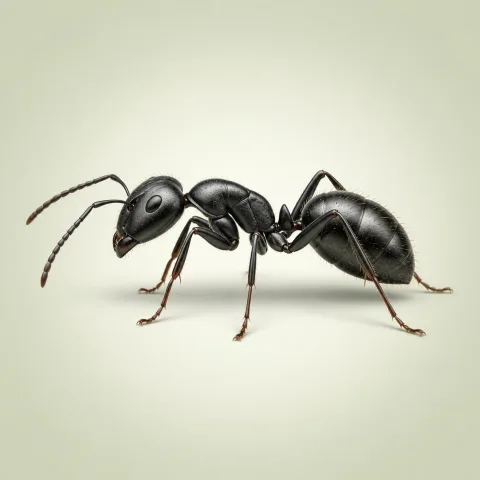
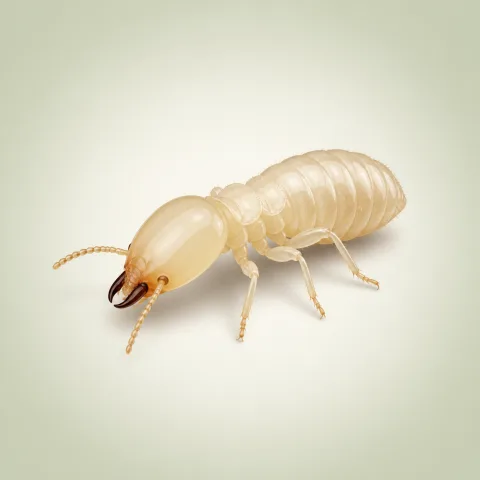
A carpenter ant has a pinched waist, elbowed antennae and front wings longer than its back wings, while a termite has a thick body with no waist, straight antennae and four wings of the same length. That is the whole trick. Grab a winged insect off the windowsill, look at it under your phone's zoom, and you will usually have your answer.
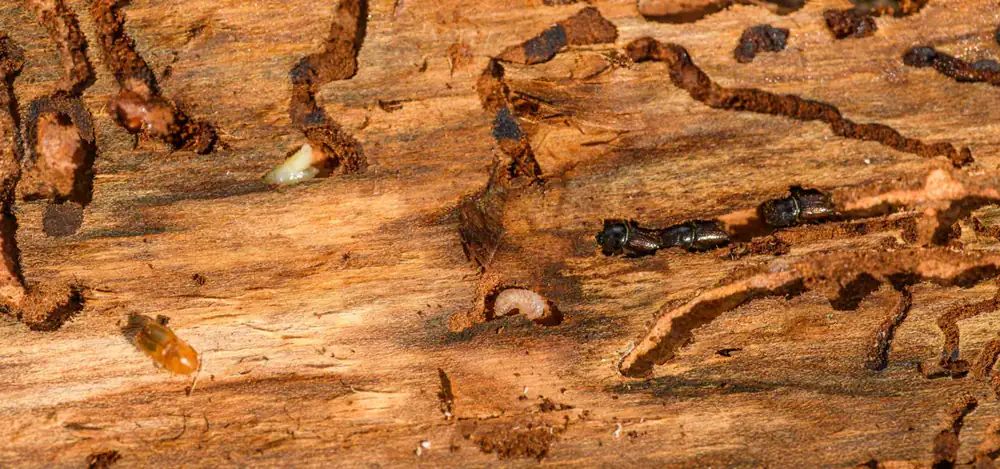
No insect handy? Look at the wood. Carpenter ants do not eat wood, they chew out nesting tunnels and shove the debris outside, so their galleries are smooth and clean, almost sanded. Termites eat the wood and line their tunnels with soil. The Pacific Northwest Pest Management Handbook notes that the western subterranean termite is the common species east of the Cascades, which puts it squarely in the Treasure Valley.
What waiting costs you
The real risk with termites in a Boise home is time, because a colony can feed inside a wall for years before anything shows. Picture it. You are asleep upstairs, the sprinklers ran at dusk, and under the back porch the soil stays cool and damp. Workers climb a mud tube no wider than a pencil, slip behind the siding and keep eating the sill plate, the board your house literally sits on. No noise you would notice. No smell. Then one spring you push a screwdriver into the trim by the slider and it sinks in like it is going through cardboard, and a contractor starts talking about replacing framing instead of treating soil.
Carpenter ants are slower, and honestly a bit more polite about it. Their version of the bad ending is a nest in the damp wood around a leaky window or under a bathroom, one or more satellite nests spreading into dry wall voids, and the faint dry rustle some homeowners describe hearing inside a wall at night. Left alone, the tunnels keep growing through wood that was already soft, and the repair bill grows with them.
Carpenter ants and termites side by side
The carpenter ant vs termite comparison below covers everything you can check without a microscope. Size is on it, but do not lean on size alone, since winged carpenter ants run from small to about 3/4 inch, according to Texas A&M AgriLife Extension.
| What to check | Carpenter ant | Subterranean termite |
|---|---|---|
| Waist | Pinched, clearly narrow | Thick, straight-sided, no waist |
| Antennae | Bent at an elbow | Straight, like a string of beads |
| Wings (swarmers) | Front pair longer than back pair | Four wings, all the same length, shed easily |
| What it does to wood | Excavates it for nesting, does not eat it | Eats it from the inside out |
| Inside the tunnels | Smooth, clean, sanded-looking | Rough, packed with soil and mud |
| Debris you find | Coarse sawdust piles, often with insect parts | Mud tubes on foundations, no sawdust piles |
| Where you see workers | Out foraging, often at night | Almost never, they avoid open air |
What you can do yourself this weekend
The best DIY step for carpenter ants or termites in Boise is to take away the moisture and the wood-to-soil contact both insects depend on. Most of this costs you an afternoon, not money.
- Collect a specimen. Drop a few winged insects into a zip bag or a jar of rubbing alcohol. University of Idaho Extension runs a diagnostic clinic through its Ada County office in Boise, and a clear ID changes everything that follows.
- Walk the foundation with a flashlight. Look for pencil-width mud tubes on concrete, in the crawl space and on piers. Found one? Leave it alone for the inspector, since a broken tube hides where they are working.
- Aim the sprinklers. Treasure Valley lawns get watered hard all summer. Heads that soak the siding or keep the soil wet against the foundation are building a termite welcome mat.
- Pull back the mulch and firewood. Keep bark and soil a few inches below the siding, and stack firewood away from the house and off the ground.
- Fix the drips. Carpenter ants love wood that is already soft: a leaky hose bib, a sweating pipe in the crawl space, a window sill that has been wet since last winter.
- Try baits, not sprays, for ants. Workers carry slow-acting baits back to the colony. Spraying the trail kills the few you see and often scatters the rest.
When DIY is not enough: five signs
A carpenter ant or termite problem has moved past DIY once the colony is inside the structure rather than just visiting. Any one of these signs puts you there:
- You confirmed termites. Store products kill the workers you see, not the colony in the soil. That is licensed-applicator work.
- Mud tubes are on your foundation or in the crawl space. The colony already has a highway into the house.
- Winged insects are emerging indoors. A swarm inside, not on the patio, usually means a mature colony in the building.
- Sawdust keeps coming back after you clean it up, or baits have run two to three weeks with no letup. There is a nest in a wall you cannot reach.
- Wood sounds hollow or gives when you press trim, a door frame or a subfloor. Now you want an inspection that measures the damage, not a guess.
If any of that sounds familiar, the sensible next step is a real inspection, not another can of spray. Call (208) 999-4091 and we connect you with a licensed local provider who can identify the insect, find the colony and tell you what the fix involves before any work starts. The call is free and carries no obligation. Same-day and 24/7 emergency services are subject to provider participation, location, technician availability, and demand. Availability is not guaranteed and may vary by market and appointment capacity.
The reassuring bottom line
Carpenter ants and termites are both very treatable in Boise, and most homeowners who catch them at the winged-insect or first-sawdust stage face a routine job, not a rebuild. Check the waist, dry out the wet spots, save a specimen, and you are already ahead of most people.
On cost, read every number as a typical market range, not a quote. A one-time ant treatment in the valley commonly runs about $150 to $350, and a liquid termite barrier for an average home about $800 to $2,500, depending on size and severity. Our termite control page explains how barrier and bait treatments work, our ant control page covers carpenter ant nests and satellite colonies, and the Boise pest control cost guide puts it all next to other pests. And if the bug on your sill turns out to have a nice skinny waist? Good news. It is an ant, and ants are the easier of the two.
Carpenter ant and termite questions from Boise homeowners
How can I tell a carpenter ant from a termite?
Look at the waist, the antennae and the wings. A carpenter ant has a pinched, narrow waist, elbowed antennae and front wings longer than its back wings. A termite swarmer has a thick, straight-sided body, straight beaded antennae and four wings of equal length. If you only have damaged wood, carpenter ant tunnels are smooth and clean, while termite tunnels are lined with mud.
Are carpenter ants or termites worse for a Boise house?
Termites are usually the bigger threat, because they eat the wood and can work for years inside a wall with no visible sign. Carpenter ants do not eat wood, they hollow it out for nesting, so their damage builds more slowly and tends to stay near wood that is already damp. Both are worth dealing with, but a confirmed termite finding is the one not to put off.
Does sawdust near my baseboard mean carpenter ants?
Small piles of coarse, sawdust-like debris under trim, a window frame or a soffit usually point to carpenter ants. Carpenter ants push the wood they excavate out of small openings in their galleries, often mixed with bits of dead insects. Subterranean termites do not leave that kind of pile, they pack their tunnels with soil instead.
Where can I get a winged insect identified in Boise?
Save a few specimens in a sealed bag or a jar of rubbing alcohol. University of Idaho Extension runs a plant and insect diagnostic clinic through its Ada County office in Boise, and a licensed pest control provider can identify the insect during an inspection and check the house for the source at the same time.
Ant or termite? Get a licensed pro to check.
Get a free, no-obligation quote from a licensed Boise-area pest control pro. It takes under a minute.