Rodent-proofing your Boise home before fall
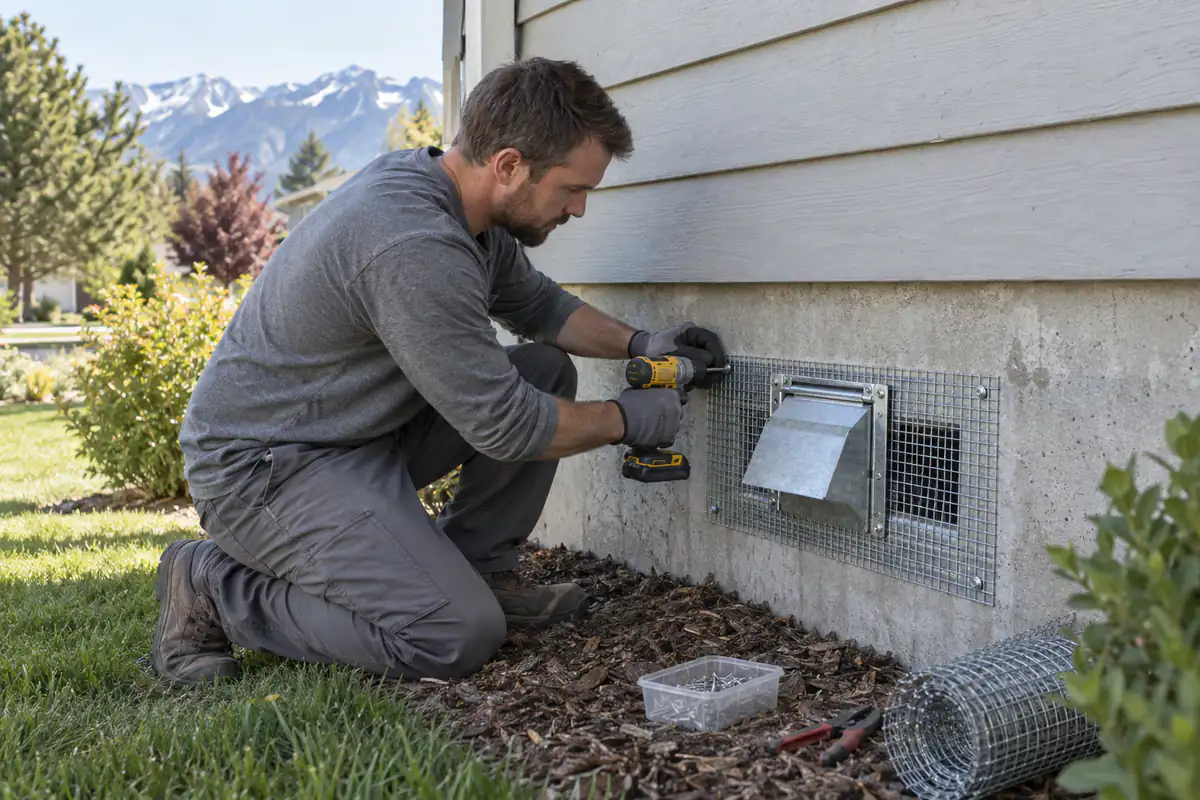
Rodent-proofing a Boise home before fall comes down to one job: close every gap a pencil fits into before the nights turn cold, and close it with metal, not foam. Do it in September and most Treasure Valley houses never host a mouse. Here is where they get in, what to seal each spot with, and when the job needs a licensed local pro.
In this guide
Why fall is rodent-proofing season
Fall is rodent-proofing season because that is when mice come looking for a way in. The University of California's IPM program says house mice frequently enter homes in autumn when nighttime temperatures become colder. The fields around Nampa, Kuna and Caldwell get cut, and every mouse on the block starts walking your foundation like a home inspector with a grudge.
Rodents invade an estimated 21 million U.S. homes each winter, according to the National Pest Management Association.
Timing beats tools. Seal in September and you lock them out. Seal in December and you may lock them in.
What one open gap can turn into by January
The worst realistic outcome of skipping fall rodent-proofing is a breeding colony in the attic, chewing on wiring above your bedroom. Nothing below is anything mice do not actually do.
A cold October night. A house mouse finds the hole where the AC line enters the siding by your garage, about the width of a pencil, which the CDC says is all a mouse needs. She climbs the wall cavity to the attic and nests in the blown-in insulation. Right over your bed. You hear her around 2 am, a light skitter across the ceiling that stops the second you sit up. The house settling, you decide. It is not the house. UC IPM puts a female house mouse at 5 to 10 litters a year of about 5 or 6 pups, and her daughters can breed at 5 to 6 weeks old. By the time the Christmas lights go up, there is a second generation up there, gnawing, because their front teeth never stop growing. The jacket on live wiring is right there. UC IPM's words: many fires of unknown origin are believed to be caused by rodents gnawing on wires.
Then the cleanup. Central District Health, the Boise-area health district, notes that deer mice carry Sin Nombre virus in Idaho. It is rare, about one infection a year statewide. But the exposure is ordinary: sweeping out a dusty shed full of droppings on a Saturday. That is why the cleanup rules below are not optional.

The fall checklist: where Boise mice get in
The fall rodent-proofing checklist is a slow lap around your house with a flashlight and a pencil, because any gap the pencil slides into is a mouse door. The CDC puts that threshold at 1/4 inch. Start at the garage.
| Spot | What gives it away | Seal it with |
|---|---|---|
| Garage door bottom seal | Daylight at the corners | A new seal. UC IPM says mice squeeze under gaps 1/4 inch tall |
| AC, gas, cable and water lines | A ring of gap where the line enters the siding | Steel wool packed in, caulk over it (CDC) |
| Dryer and bath fan vents | Flap missing or stuck open | A cover with a working flap. No mesh on a dryer vent, lint clogs it |
| Crawl-space vents | Bent or rusted screens, common on older Bench and North End houses | Hardware cloth screwed over the opening |
| Foundation-to-siding seam | Cracks, or a gap above the concrete | Cement, or metal sheeting for wider gaps |
| Exterior doors | Light under the door | A door sweep. UC IPM: doors and screens should fit tightly |
| Eaves, soffits, gable vents | Gaps at the fascia, torn gable screens | Metal or hardware cloth, usually a ladder job |
| Inside: sinks, stove, water heater | Gaps where pipes pass through walls or floors | Steel wool and caulk |

DIY steps that actually hold
The DIY rule that matters most: seal with metal, masonry or caulked steel wool, never foam alone. UC IPM is blunt that expanding foam, plastic screening, rubber, vinyl and wood are gnawable and ineffective. Foam earns its place only the way the CDC uses it, holding steel wool in the hole.
- Pack small holes with steel wool and caulk over it. UC IPM notes the pads can rust, so recheck them each fall.
- Cover bigger holes with hardware cloth, sheet metal or cement, the CDC's list.
- Fix the garage door seal first. If you get one thing done this weekend, make it this.
- Clear the approach. The NPMA says to keep firewood at least 20 feet from the house, trim shrubs back and store boxes off the floor.
- Lock up the food. UC IPM says house mice do not need to drink water, so pet food and bird seed in the garage matter more than a dripping hose bib. Use metal or hard plastic bins.
- Trap near the evidence. House mice seldom venture more than 30 feet from their nest, per UC IPM, so set snap traps behind objects and in dark corners where you see droppings.
- Skip the ultrasonic plug-in. UC IPM finds little evidence it drives established mice out.
- Clean droppings the CDC way. Air the room out for 30 minutes, wear gloves, soak droppings in 1 part bleach to 9 parts water for 5 minutes, wipe up. Never sweep or vacuum.
When DIY is not enough: five signs
Rodent-proofing becomes a job for a licensed pro when mice already live inside, or the gaps sit where you should not be on a ladder. Any one of these is enough:
- Scratching in the ceiling after you sealed up. You may have sealed them in.
- Fresh droppings in more than one room, or still appearing after a week of trapping.
- A nest in attic insulation, or gnawed wiring. Have an electrician check that wiring too.
- Openings at the roofline that need a tall ladder.
- A shed or crawl space with heavy droppings, especially from white-bellied deer mice.
If one of those fits, the sensible next step is a phone call, not another hardware store run. Call (208) 999-4091 and we connect you with a licensed local provider serving Boise, Meridian, Nampa and the rest of the Treasure Valley, who can inspect, trap, seal the entry points and price the job with no obligation. Same-day and 24/7 emergency services are subject to provider participation, location, technician availability, and demand. Availability is not guaranteed and may vary by market and appointment capacity. Our rodent control page for Boise explains what a full exclusion job includes.
What sealing a house typically costs
Professional rodent-proofing is priced by how many gaps your house has, so a September inspection usually costs less than a January cleanup. HomeGuide's 2026 figures put mouse extermination at roughly $150 to $550, and rodent-proofing after the mice are out at about $100 to $800. Those are typical market ranges, not a quote. The Boise pest control cost guide compares rodents with other pests, and the seven signs of mice in a Boise home tell you whether they are already in.
The good news: mice are persistent, not magic. Tight doors, a new garage seal and metal over every pencil-sized gap make a boring house to a mouse, and boring is what you want. One September Saturday with a flashlight and a caulk gun sets most Boise homes up for winter.
Rodent-proofing questions from Boise homeowners
When should I rodent-proof my Boise home?
Rodent-proof a Boise home in September, before the nights turn cold. The University of California IPM program says house mice frequently enter homes in autumn when nighttime temperatures become colder, so sealing gaps early locks mice out instead of locking them in. If you already hear scratching in the walls, trap and inspect first, then seal.
Does spray foam keep mice out?
Spray foam on its own does not keep mice out. UC IPM lists expanding foam alongside plastic screening, rubber, vinyl and wood as gnawable materials that are ineffective against house mice. The CDC uses caulk or spray foam only to hold steel wool in place. For larger openings, use hardware cloth, sheet metal or cement.
Do ultrasonic plug-in repellers keep mice away?
Ultrasonic repellers are not a reliable way to keep mice away. UC IPM says there is little evidence that sound, or magnetic or vibrational devices of any kind will drive established house mice or rats from buildings. Sealing the entry points and setting snap traps where you find droppings does the real work.
Is it safe to sweep up mouse droppings in my garage or shed?
No, do not sweep or vacuum mouse droppings. The CDC warns that sweeping or vacuuming can put tiny droplets containing viruses into the air, and Central District Health notes that deer mice carry Sin Nombre virus in Idaho. Air the space out for 30 minutes, wear gloves, soak droppings with 1 part bleach to 9 parts water for 5 minutes, then wipe them up.
Already hearing mice in the walls? Get them out before you seal up.
Get a free, no-obligation quote from a licensed Boise-area rodent pro. It takes under a minute.